

Class of 1965
Durward Allan Limbacher
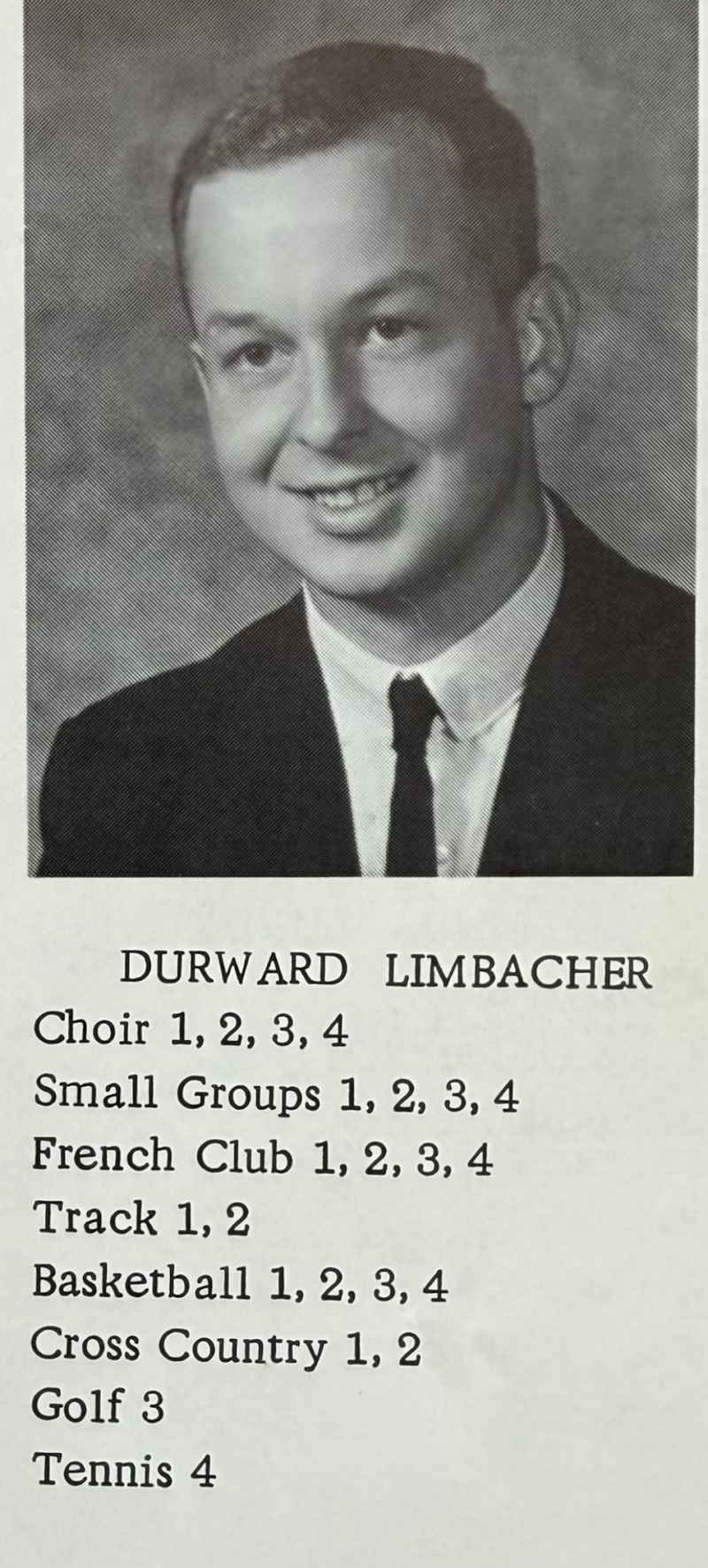
PFC Durward Allan Limbacher
Jul 2, 1947 — Dec 6,1967
Class of 1965
Durward graduated from Farragut Community High School (Class of 1965) and attended Northwest Missouri State College (re-designated Northwest Missouri State University on 8/14/1972) until he was drafted and subsequently enlisted in the US Army in 1967. After completion of Basic Combat Training and Advanced Individual Training as a Combat Medic (MOS 91B), he received orders for the Republic of Vietnam where upon arrival in country on 9/19/1967, he was assigned to Headquarters Company, 4th Battalion, 12th Infantry Regiment, 199th Infantry Brigade as a combat medic.
Durward was the youngest son of Mrs. Helen Limbacher, who was an educator, mentor of students and icon in the Farragut Community School district.
*****
On Wednesday, December 6, 1967, he was attached to Company A, 4th Battlaion, 12th Infantry, 199th Infantry Brigade during combat operations 5 miles north of the village of Tan Uyen – approximately 35 miles northeast of Saigon, when his unit encountered an enemy ambush.
Days of Valor: An Inside Account of the Bloodiest Six Months of the Vietnam War
Author – Robert L. Tonsetic - Copyright 2007
“Days of Valor covers a six-month slice of time during the Vietnam War from December 1967 through May of 1968. These months, which encompassed both the Tet Offensive and the May Offensive of 1968, were the bloodiest months of the war for US forces. Most of the book is focused on the infantry battalions of the 199th Light Infantry Brigade as they struggled to disrupt the enemy’s build-up and subsequent attacks on the strategic installations in and around Saigon, Bien Hoa and Long Binh.”
Details from page 38 of “Days of Valor” include:
“Wounded and dying men were scattered all along the shrinking line. As the battle raged on, combat medics moved from man to man to render life-saving first aid and drag the men out of the line of fire”.
“PFC Durward Limbacher, an Alpha Company medic, was one of the lifesavers that the grunts depended on. The 20-year-old Iowa native moved forward immediately after contact was made to administer first aid to two seriously wounded soldiers. After he treated the two, he spotted a third soldier several yards forward of his position. Without hesitation, Limbacher exposed himself to incoming fire and dashed forward to aid the seriously wounded man. Enemy machine gun fire erupted from a bunker less than ten meters away, killing Limbacher instantly. He was not the last medic to die in this battle.”
FINAL MISSION OF PFC DURWARD A. LIMBACHER
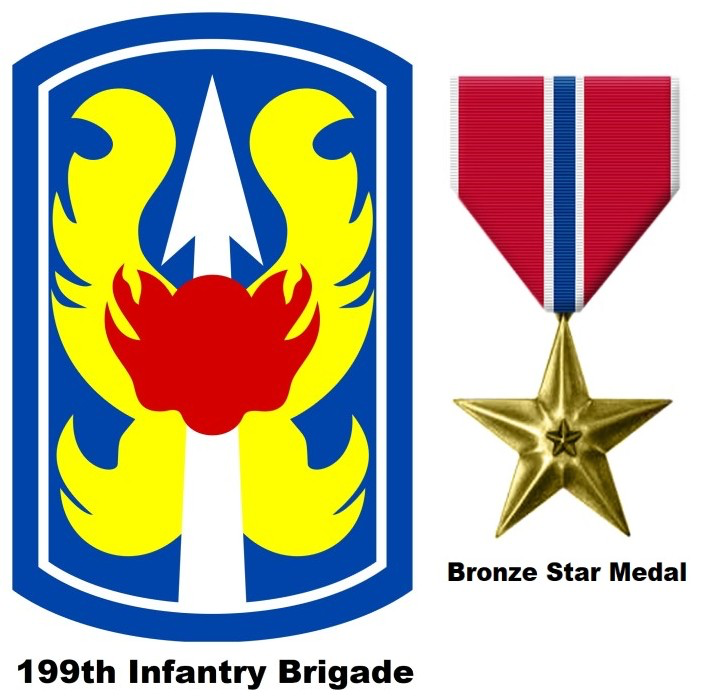
The 199th Infantry Brigade (Light) “Redcatchers” arrived in Vietnam in December 1966 and were based near Long Binh Post in Bien Hoa Province.
On December 6, 1967, the 4th Battalion, 12th Infantry Regiment command post at Fire Support Base Nashua received 20-25 rounds of 82mm mortar fire resulting in three Redcatchers wounded. Utilizing intelligence and a reverse azimuth of the enemy mortar fire, 4/12th conducted a search and destroy operation to the southeast of Nashua. At 2:45 PM, elements of A-4/12th located a battalion-sized Viet Cong base five miles north of the village of Tan Uyen. Khaki uniform clad enemy in dug-in positions of anthill-type bunkers with underground tunnels utilized automatic weapons and Claymore mines to inflict heavy casualties. With medical evacuation helicopters driven away by the enemy fire, the 4/12th battalion commander declared a tactical emergency. Elements of 3rd Battalion, 7th Infantry Regiment, and Troop D, 17th Cavalry Regiment responded, each fighting through ambushes, heavy fire, and weak radio connections to reach the besieged Redcatchers. After being reinforced, two of Company A’s platoons with 3/7th and D/17th launched a counterattack. They were supported by airstrikes, helicopter gunships, artillery, and flare ships after dark. The enemy body count was 67 dead with another 85 possible killed and an assortment weapons and supplies captured. Redcatcher losses were 25 dead with 82 wounded.
The lost personnel included (HHC-4/12th) medics PFC Durward A. Limbacher (BS) and SP5 Teddy G. Whitton (SS); (A-4/12th) PFC John C. Filippi, SGT Gary G. Hahn (SS), PFC David M. Midcap (BS), SGT William H. Pruitt Jr. (BS), and SP4 Eugene Zeigler (BS); (E-4/12th) PFC Robert O. Buckner Jr. and PFC Joseph L. Reynolds (BS); (HHC-3/7th) medic PFC Robert L. Pultz; (A-3/7th) CPL Robert J. Bawal, 2LT Gary R. Clark (SS), PFC Solomon W. De Hart, MSG Guy M. Finley (SS), PFC Thomas O. Harper Jr. (BS), CPL Douglas L. Mc Loud (BS), SGT Mario Moreu-Leon (BS), CPL Robert A. Pretty (SS), CPL Daniel K. Puhi (BS), and 2LT John W. Sognier Jr. (SS); and (D-17th) PFC Charles E. Brown, PSGT Alfred Dugger, SP4 Ronald R. Hammerstrom (BS), SP4 Kevin M. Mc Govern, and PFC Clayton M. Spainhower.
(Note: “BS” and “SS” indicate Bronze Star or Silver Star medal)
[Sourced from coffeltdatabase.org, virtualwall.org, armyhistory.org, and “Operational Report - Lessons Learned, Headquarters, 199th Infantry Brigade (Lt)(Sep), Period Ending 31 January 1968” at archive.org]