Year of First Farragut High School Graduation
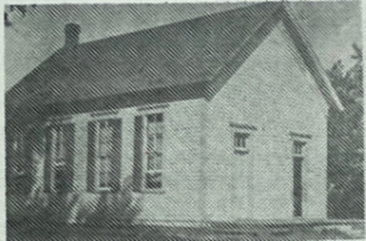
Three years after the founding of Farragut in 1870, Fisher Township met their obligation as mandated by the Land Ordinance of 1785 and the Northwest Ordinance of 1787 to provide educational opportunities for its citizens, built Farragut’s first school.
Year of First Farragut High School Graduation
Three years after the founding of Farragut in 1870, Fisher Township met their obligation as mandated by the Land Ordinance of 1785 and the Northwest Ordinance of 1787 to provide educational opportunities for its citizens, built Farragut’s first school.
1873
The first school building, which was a one room wooden frame structure, was erected on the southeast corner of Washington St and St Phillip Ave (years later this was the location of the Dale Gudgel residence). This building continued to be used for the primary grades for some time after the brick structure was built in 1880. Later, it was purchased by the Christian Church and used as a place of worship. After the new Christian Church was built in 1894, the wooden framed building was sold to Joe Coleman, who moved it the country and had it remodeled. Later it was the home of the Carl King family.
This building followed the standard of the time and even though it was physically located inside the boundaries of the town of Farragut, it was a country school owned and operated by Fisher Township and identified as No. 6 schoolhouse.
During the meeting of the school board in March 1880, the independent district of Farragut was set off from Fisher Township. Fisher Township gave the town the old No. 6 school house and $1500 as dower. This led to the construction of the two-story brick school house located north of the Congregational Church on Tecumseh Ave.
The new brick school of 1880 didn’t have a graduating class until 1889
Graduates were: Ella Replogle Ed Speer Carl Thornton
Traditional Iowa country schools (one-room schoolhouses) typically did not offer 12 grades. They primarily served as ungraded common schools, focusing on grades 1 through 8.
The system operated in a very specific way:
- Ungraded Structure: A single teacher taught all eight grade levels in one room. Students learned by listening to older classes and reviewing younger material.
- Graduation: The standard milestone for country schools was graduating from the 8th grade.
- High School: To attend high school, rural students often had to board in town or commute to larger, graded city schools.
- Consolidation: It wasn't until Iowa passed school district consolidation laws in the 1950s that rural districts were required to offer kindergarten through 12th grade, leading to the closure of most one-room schoolhouses.