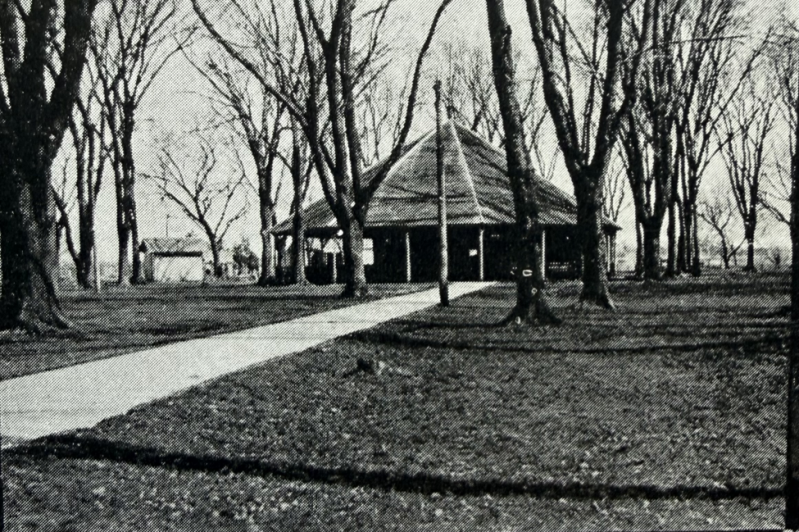
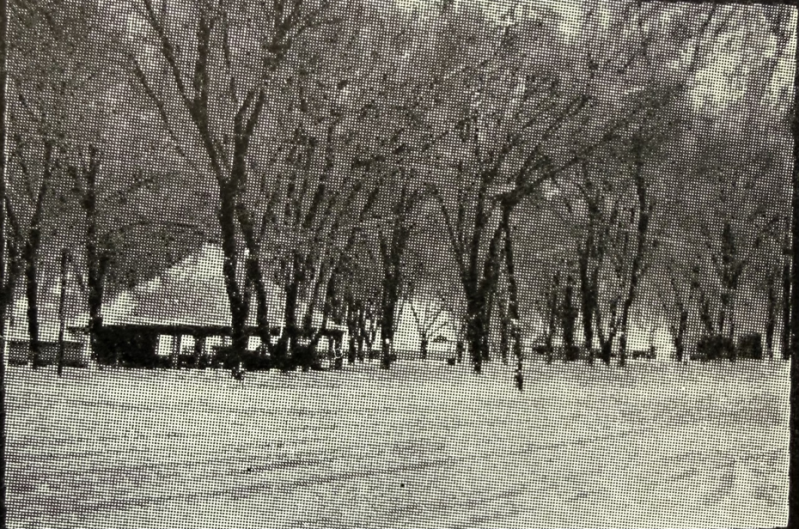
Farragut City Park (pre-1947)
Unfortunately most readers of this will not remember when the park looked like this.
*“On March 13, 1947, the City Council donated the park pavilion to the Community Club. The club wrecked the pavilion to secure the material for bleachers at the ball park” - later to be named Hackett Field. (That bleacher structure was featured in an earlier article I shared on Facebook)
*Source: the Farragut Centennial book
I share these two photos to remind those of my era and to inform those who are younger of what once was a center of activity in Farragut. Growing up across the street from the park, the pavilion was gone before I arrived on scene. The sidewalk you see led from the northwest corner of the park to the pavilion. The sidewalk remained after the pavilion was gone so for me, it was a sidewalk to nowhere.
The small white building to the left of the pavilion was a restroom and it remained after the pavilion was gone. Males entered from the south and females from the north. Sometime after the pavilion was removed, a combination slide and swings were installed. There was a water fountain between the restroom building and the slide/swing set. A kid had most everything he needed there and I could be “observed” from the kitchen window across the street. Hours were spent in the park.
I no longer remember the exact number of kids who lived in the vicinity of the park but both day and night, many kids of different ages would gather to play ball, hide and seek, kick the can, etc., etc. When it got too dark to play ball, some went home while others remained and just changed the game they played.
Another aspect of these photos is the number of trees in the park. There were many more than are pictured here. Squirrels could move from one side of the park to the opposite side and never need to touch the ground. After dark, you could remain “unfound” for the longest time when playing hide and seek.
The majority of the trees in the park were Elm trees and in the late 50’s-early 60’s, the plague of the Dutch elm disease made its way into Farragut. It affected many elm trees all over town but the density of the park’s trees created an easy target for the disease. As elm trees succumbed to the disease, Jerry Butts stayed incredibly busy all over town cutting them down, removing the wood, and cleaning up after. It was always a sad day for me when Jerry’s truck would appear in the park. It seemed like weeks would go by with the roar of chain saws; the air filled with the smell of oil-gas mixtures flowing through the saws and the lingering scent of elm chips left behind.
The diminished number of trees in the park was a game-changer for us kids living on the four sides of the park…literally a game-changer as we lost many of our places to hide.
The next time you are near the park, picture what it was like to have a forest that close to your home and a surrounding neighborhood full of kids who enjoyed doing things together.
On an even more personal note…
On July 4, 1900, the park was the central activity center during Farragut’s Independence Day celebration. People traveled from nearby farms and towns to participate in the festivities. In the park, families enjoyed games and picnic lunches.
In the northwest corner of the park, near where the sidewalk in this picture met the street, a shooting gallery had been set-up (directly across the street south from my living room years later). Shooters, with their backs to the north, aimed at targets to the south. Somehow, a bystander named Frank Livingston was accidently fatally wounded that day. Frank Livingston Dec 11, 1874– July 4, 1900.
Frank was the older brother of my Great-Grandfather John Henry Livingston.