
Mike Whitehill

Captain Michael Whitehill
20 May, 1970
Republic of Vietnam
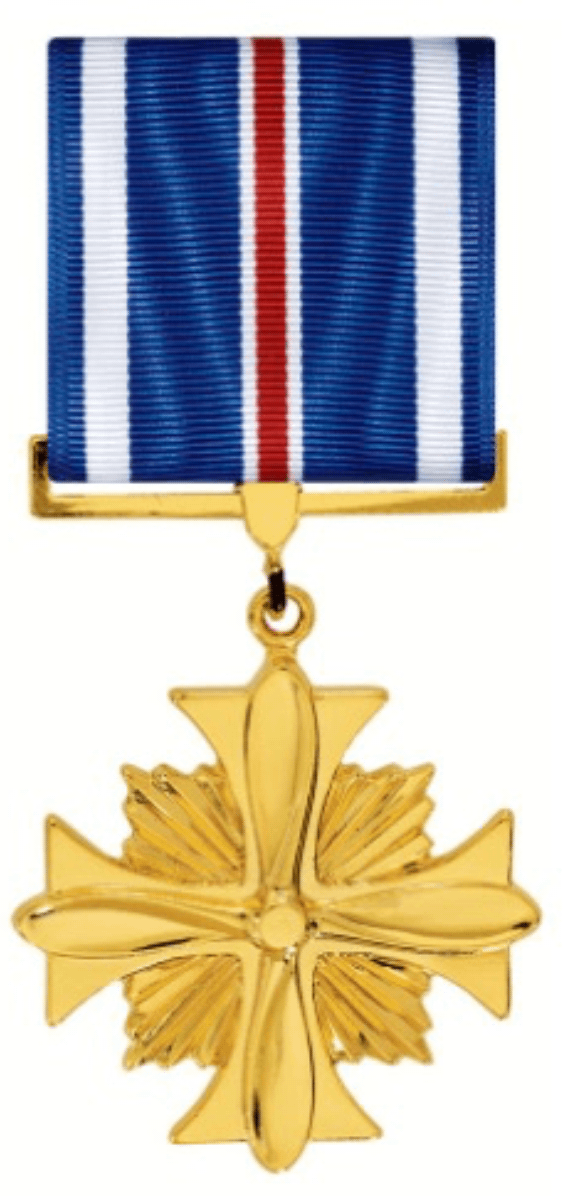
Distinguished Flying Cross
It ranks as the 4th highest award for-heroism and the top specific award for extraordinary aerial achievement in the U.S. Armed Forces.
(only the Congressional Medal of Honor, Distinguished Service Cross
and the Silver Star rank above)
A Story of Honor and Courage
as told to Dwight Durfey to be shared with you.
In May 1961, the Farragut High School senior class donned gowns and flipped tassels. Excited to have completed the pursuit of their high school diploma, they bid farewell to teachers, classmates and friends and moved on to the next challenge presented to them. Each of them would go on to create their own story of life after Farragut. This is the untold story of one of those 1961 graduates.
The son of Herschel and Irene Whitehill, Mike and I were neighbors. He was a classmate of my older brother Ronnie and our backyards were separated only by an alley and each other’s garden. When their kitchen light was on, I could see it from my bedroom window, less than 50 yards away. His dad and his barbershop were fixtures on main street and his mom was prominent in the community and in civic organizations. Each year Herschel and my dad would engage in spirited contests as to which of them could outdo the other in growing tomatoes and other garden produce. I plowed that garden and mowed their lawn. This was the definition of the good life, as I knew it.
I didn’t see Mike much after his class graduated. I was aware the he had moved on to Iowa City to attend the University of Iowa. As time passed and world events evolved, both of my older brothers received orders for Vietnam in the 1968-1969 time period. That obviously had the full attention of my family. It was at about that time that I became aware that Mike was involved in the Army ROTC Program at the University of Iowa. Some time later I learned that he had completed Army aviation training and was a helicopter pilot serving in Vietnam.
That was the end of the story until one September day in 2025.
In pursuit of Farragut history, my aunt Charlotte handed me her copy of the Farragut Centennial book. I remembered the book from the Centennial celebration in the summer of 1970 but I had never spent time reading through it in detail.
(After a few minutes of page turning, I negotiated with Charlotte to allow me to borrow her copy so I could arrange to have it reproduced. Since then, 200 copies have been re-printed and whatever inventory that remains is available from the Alumni Association).
When I had my own copy and time to more closely examine its contents, I was stunned to read the following:
“May 13, 1970 – Army Captain Michael Whitehill, age 26, son of Mr. and Mrs. Herschel Whitehill, was cited for Aerial Heroism in Vietnam and received the Distinguished Flying Cross.”
After learning this, I began my search for details of Mike, hoping to find him well and willing to engage. I spoke with many folks with Farragut ties and no one was able to provide me with any viable information. By chance, I read the obituary of his cousin Bill Simmons in May 2026 and Mike and his wife Ann of Surprise, AZ were listed as survivors. After a little more sleuthing, I found Mike and we have since engaged.
This is the end of this posting.
Coming next will be details from my conversation with Mike and his willingness to share his story.
Dwight Durfey – Class of 1971

Dwight, I appreciate your taking interest in my being awarded the Distinguished Flying Cross (DFC) long-ago during the Vietnam war. I am honored to have been awarded such a high honor, but I get a little-embarrassed to have been regarded as a hero. The mission that I was on is certainly worthy of being so distinguished, but all helicopter pilots back then regularly were performing hazardous duties. It is not common knowledge, but during the Vietnam war 2,200 helicopter pilots were killed … a percentage far exceeding all other military occupations. I am sorry to start off on a bleak note, but I felt a need to pay tribute to the 2,200. With that said, let me get on with your request for information about my life after Farragut (FHS class of ’61) and the details about the DFC mission.
While attending the University of Iowa, I participated in the Army ROTC and was accepted into the flight program where I obtained my fixed-wing license. Upon graduating with BA and MA degrees in business, I was commissioned as a 2nd Lieutenant with a 3-year Army military obligation ahead of me.
By this time it was 1968, I was newly married, and the Vietnam war was reaching its peak with the Vietcong's Tet offensive. We newly commissioned lieutenants knew that after training we certainly would be assigned as helicopter pilots in Nam ... not a happy prospect. After a short stint in tank training at Ft. Knox, KY, my 4-month basic helicopter training began at Ft. Wolters, in Mineral Wells, TX. My 4-month advanced helicopter training and Vietnam preparation was at Ft. Stewart in Savannah, GA.
In June, 1969, I reported to my assigned 3/17th Air Cavalry unit in Di An, Vietnam.
Our home base was in Di An (between Saigon and Bien Hoa), but our daily missions would take us anywhere in the III Corps area.
Our Air Cav unit was what was called "hunter/killer" teams: Small LOH (light observation helicopter) scouts that would fly low searching for evidence of enemy locations. Huey "slicks" (which I flew most often) utility helicopters would insert troops, resupply ground troops, perform medivac, etc. And Cobra gun-ships that would provide us overhead rocket and minigun cover.


Captain Michael Whitehill
20 May, 1970 – Republic of Vietnam
DEPARTMENT OF THE ARMY
HEADQUARTERS, 1ST AVIATION BRIGADE
APO San Francisco 96384
GENERAL ORDERS “NGUY HIEM” 20 May 1970
NUMBER 3996
AWARD OF THE DISTINGUISHED FLYING CROSS
TC 439. The following AWARD is announced.
WHITEHILL, MICHAEL CAPTAIN ARMOR United States Army
Troop C, 3rd Armored Squadron, 17th Air Cavalry, APO 96289
Awarded: Distinguished Flying Cross
Date of Service: 12 April 1970
Theater: Republic of Vietnam
Authority: By direction of the President under the provisions of the Act of Congress,
approved 2 July 1926, AR 672-5-1 and USARV Reg 672-1 dated 1 July 1969.
Reason: For heroism while participating in aerial flight evidenced by voluntary actions above and beyond the call of duty: Captain Whitehill distinguished himself by exceptionally valorous actions while serving as aircraft commander on a transport helicopter in support of a medical evacuation. He voluntarily hovered his aircraft into an extremely tight and confined area so a rescue ladder could be lowered to the injured crew of the scout aircraft that had previously been downed by hostile fire. He spent many arduous minutes hovering the aircraft to enable the crew to reach the rescue ladder. After the injured crew was on board, he expeditiously evacuated the crew to the nearest medical facility. He then returned to the downed aircraft to insert a team to prepare the ship for recovery. He remained in the area until the aircraft was safely evacuated and volunteered for the third time to enter the hostile area to retrieve the rigging crew. Through his courage and sound judgement, he contributed immeasurably to the success of the mission. His actions were in keeping with the highest traditions of the military service and reflect great credit upon himself, his unit, and the United States Army.
FOR THE COMMANDER:
OFFICIAL: JERRY M. BUNYARD
JAMES M. NAKAGAWA LTC, Field Artillery
CW2, USA Chief of Staff
Asst AG
End of Order
Common translations of “NGUY HIEM”:
Dangerous, Danger, Risky, Hazardous, Perilous
Mike’s description of the mission that led to award of the DFC:
“During a mission when I had only a few months left to serve in Nam, one of our LOH (Light Observation Helicopter) copters with a crew of three was scouting low level in the jungle when it ran into a heavy enemy encampment. Machine gun and rifle fire began ripping through the helicopter, but our scout pilot was able to limp the aircraft a mile or less away from the site until the engine failed and he had to set it down and abandon it. Our Cobras overhead were unable to pound the area because they weren't sure where the LOH was. For certain, the Vietcong were giving chase to the wounded LOH. The downed crew with some injuries radioed their approximate location, grabbed weapons, and fled the aircraft. There were no open spaces nearby in the jungle in which a rescue helicopter could land. As the aircraft commander of the only Huey flying near the site with a 50' drop rescue ladder on board, I was asked to attempt a rescue. The fleeing crew had popped a smoke canister to show their location. I soon could identify the red smoke drifting up through the jungle canopy, but the problem was finding a place where I could get low enough to get the ladder within the crew's reach. I found a narrow thin spot in the dense tree canopy and was able to maneuver my way down through the trees low enough to get the ladder to reach the ground. The panicked crew saw me and ran to the ladder. For 30 minutes I had to hover at 50 feet in a confined space so small that my rotor blades were ticking tree limbs while my three wounded friends tried to crawl up the ladder. My door gunner's barrel was hot as he was maintaining constant fire to keep the bad guys at bay. The ladder hung out of the right side of my copter and when all three of them were trying to cling to the rungs, the added weight on the right side was pulling my rotor further into the trees. [In helicopter speak, I was running out of left cyclic.] My crew chief had to signal to them ... one at a time. When the last of the three managed to finally get pulled aboard, I had to go straight up so that the dangling ladder didn't get hung up on a tree branch. We were out of there ... extraction successful! Our Cobra gunships were then free to strafe the area with rockets. Miraculously, the injuries to the downed flight crew ... my friends ... were minor and they were safe. Thank God.”